Project by Studio Bianchi Architecture, in charge of project development alongside the lead architect, also responsible for architectural visualization and videos .
Following UNESCO’s recognition of Mongolians: Mongol Nomad Migration and Its Associated Practices as part of the Representative List of the Intangible Cultural Heritage of Humanity, this new center is envisioned as a dedicated space for research, exploration, and celebration of the Mongolian way of life. A place where tradition meets innovation, the center will serve as a hub for scholars, artists, and cultural enthusiasts to immerse themselves in the rich heritage of Mongolian nomadic practices, fostering preservation and global appreciation.
Location
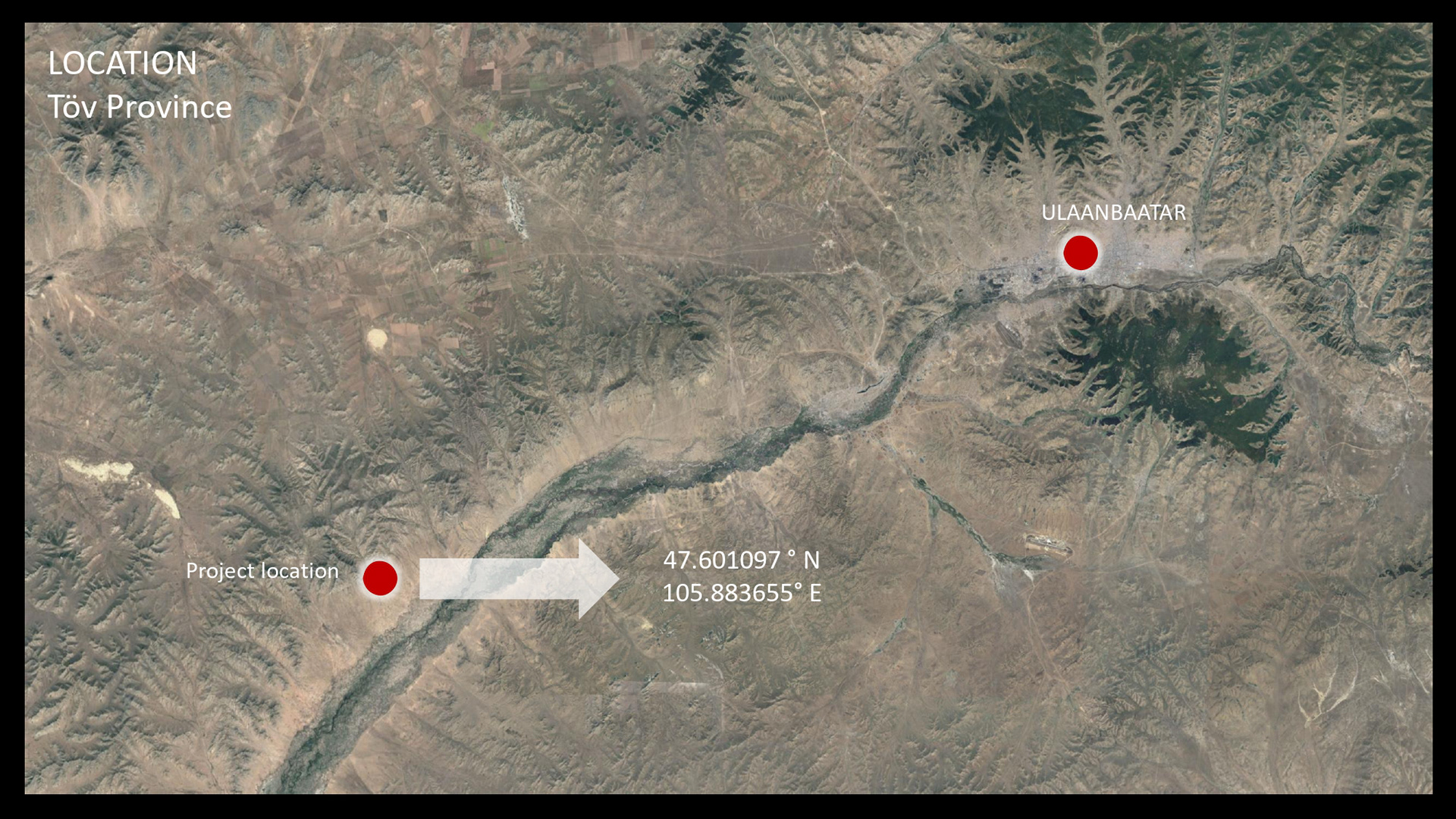
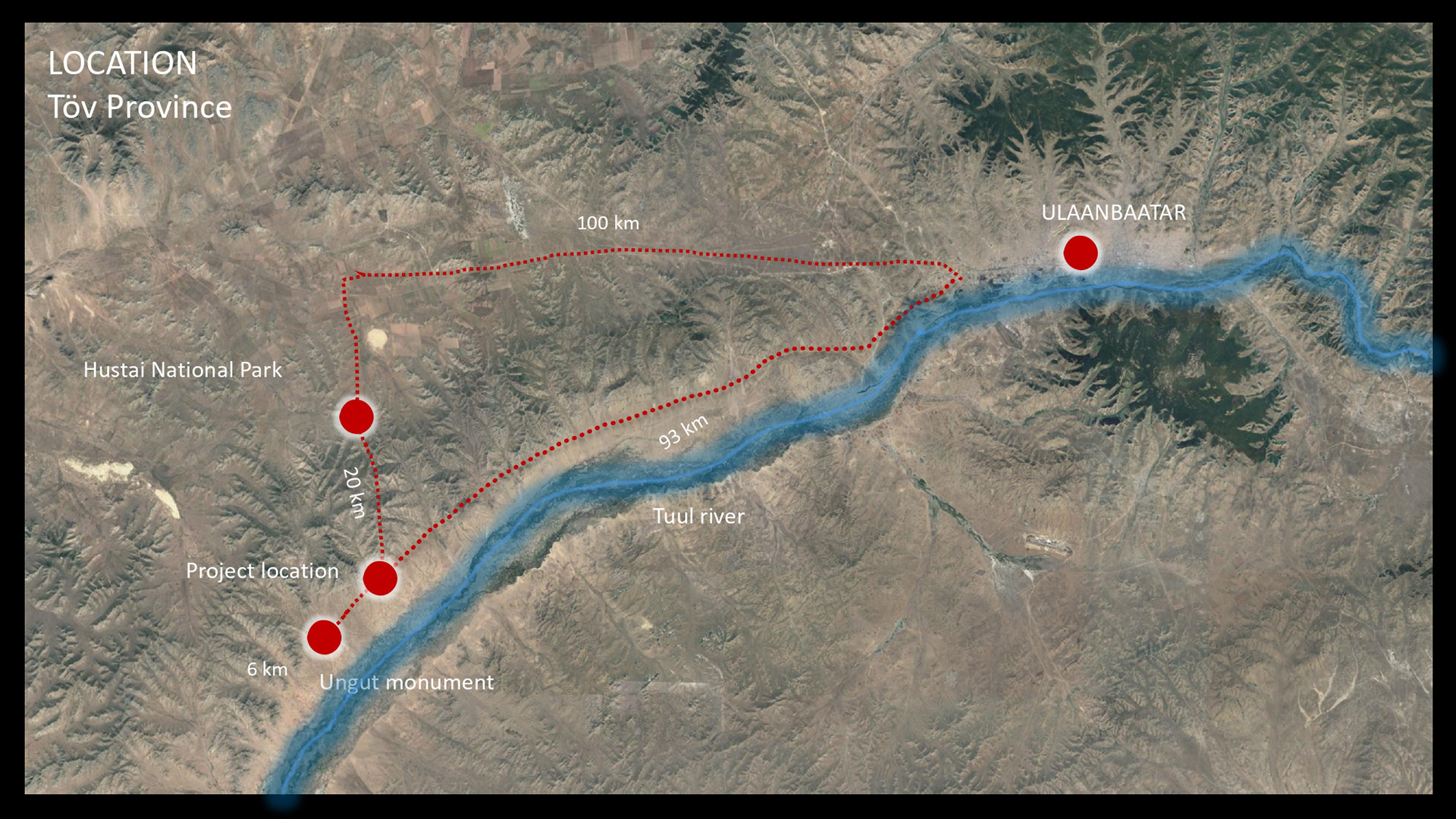
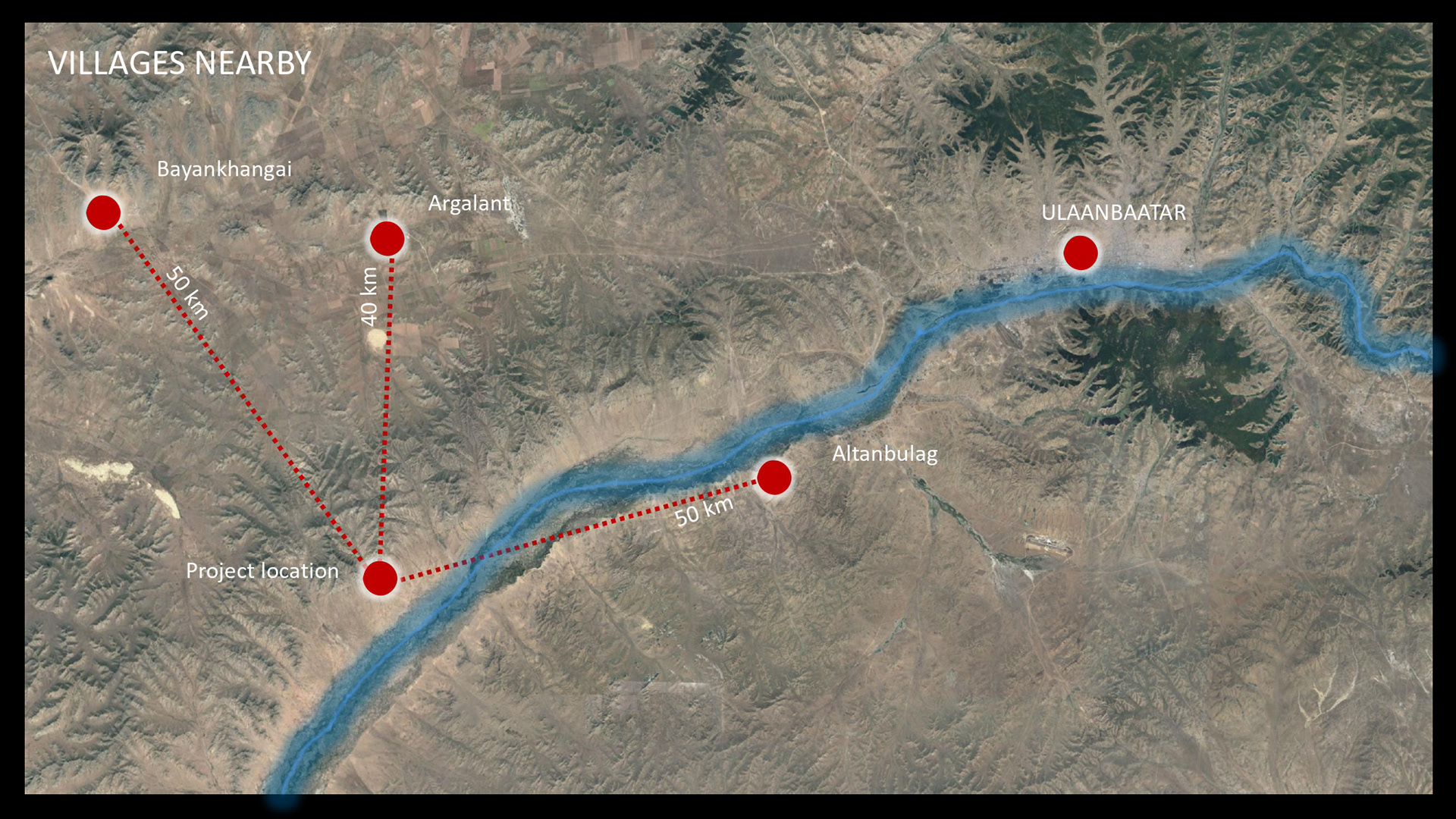
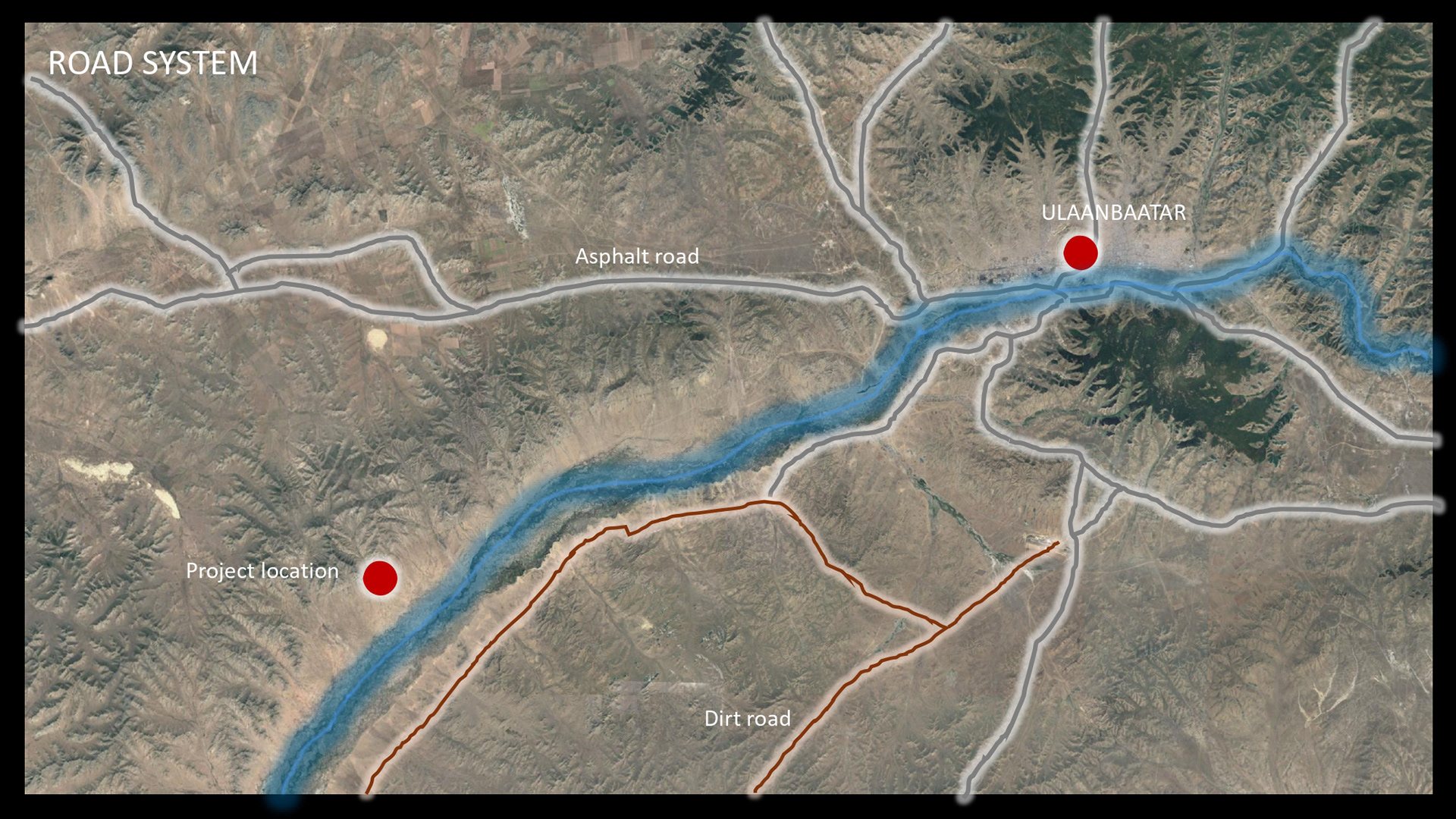
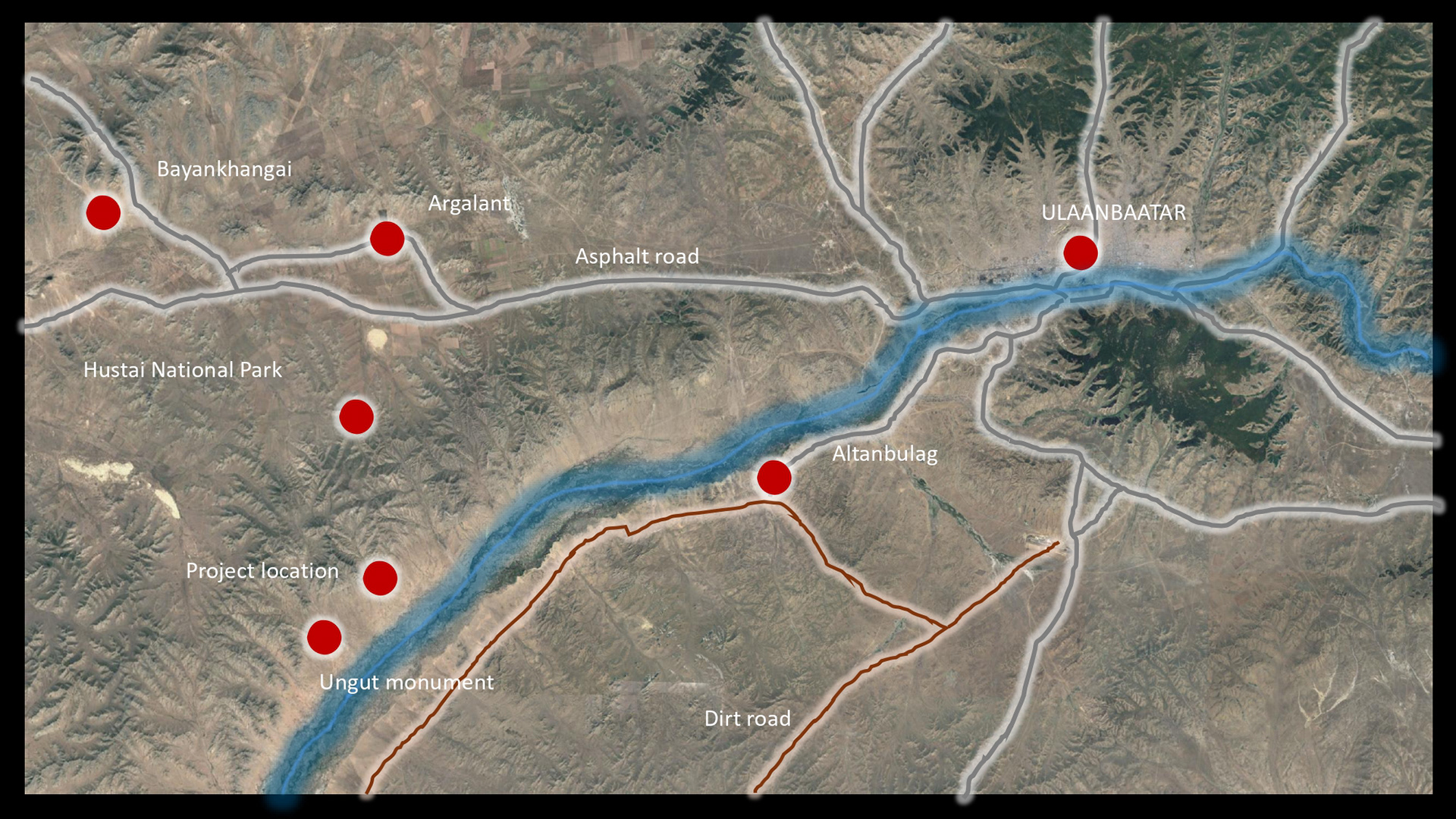
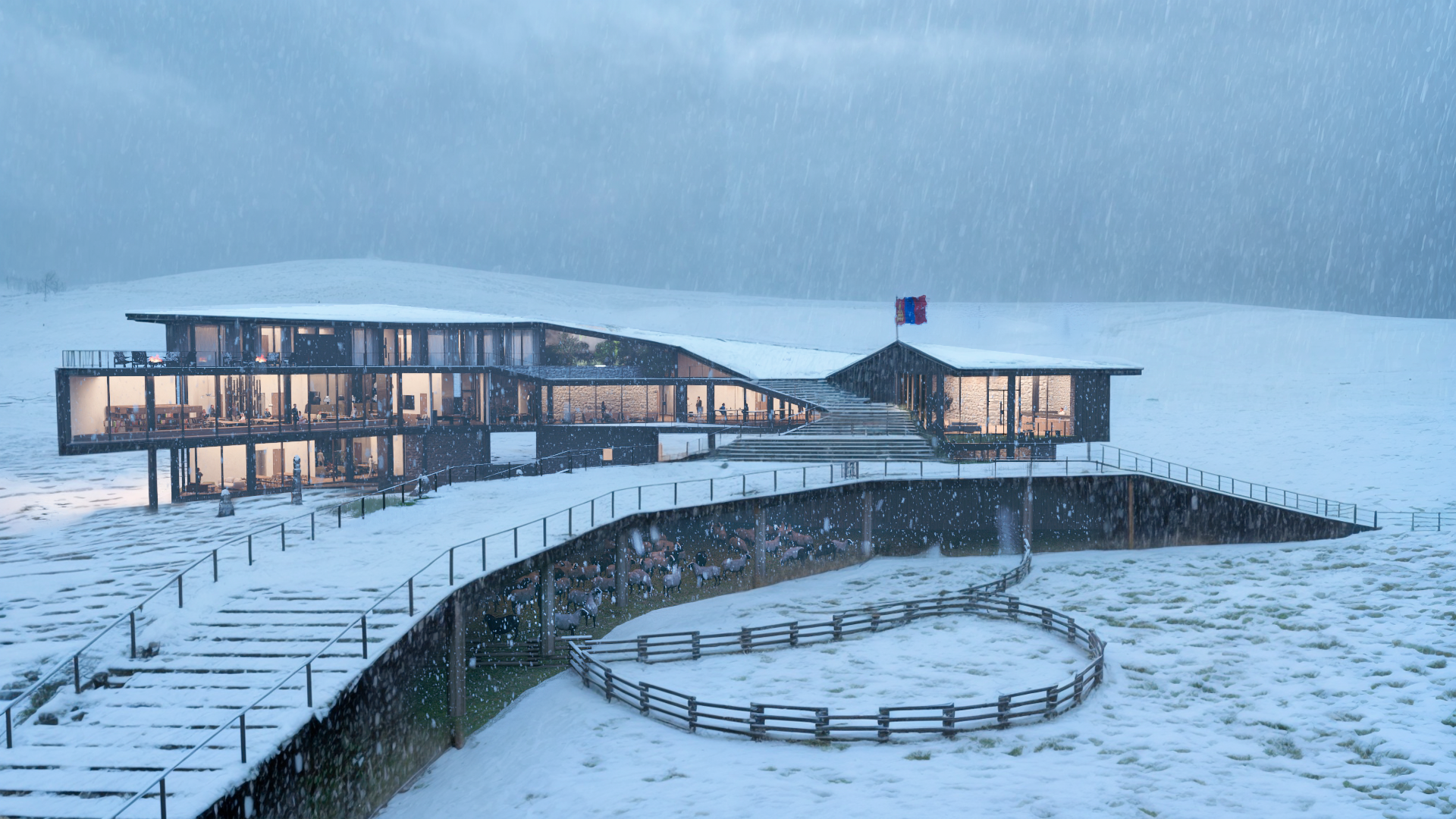
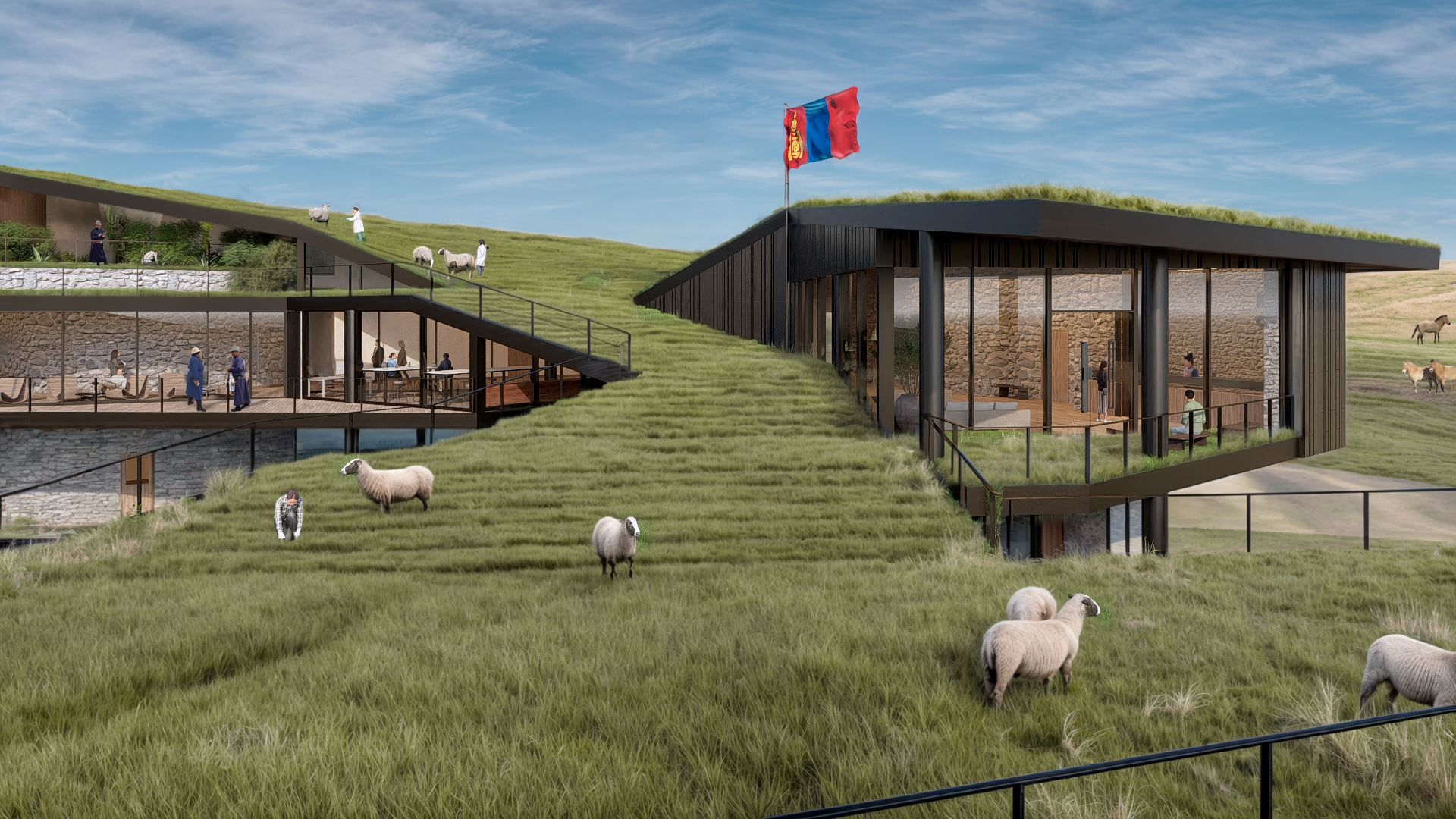
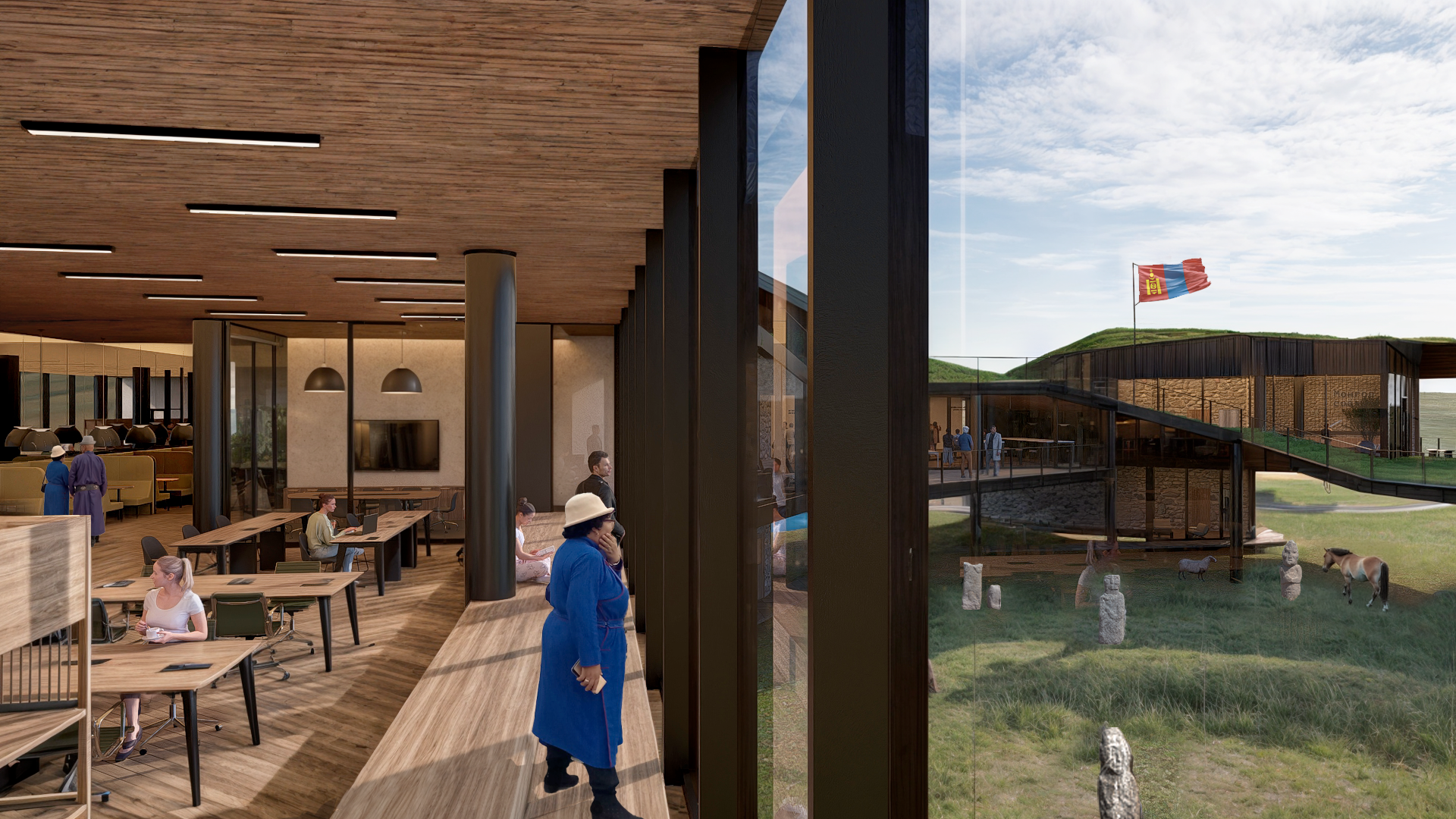
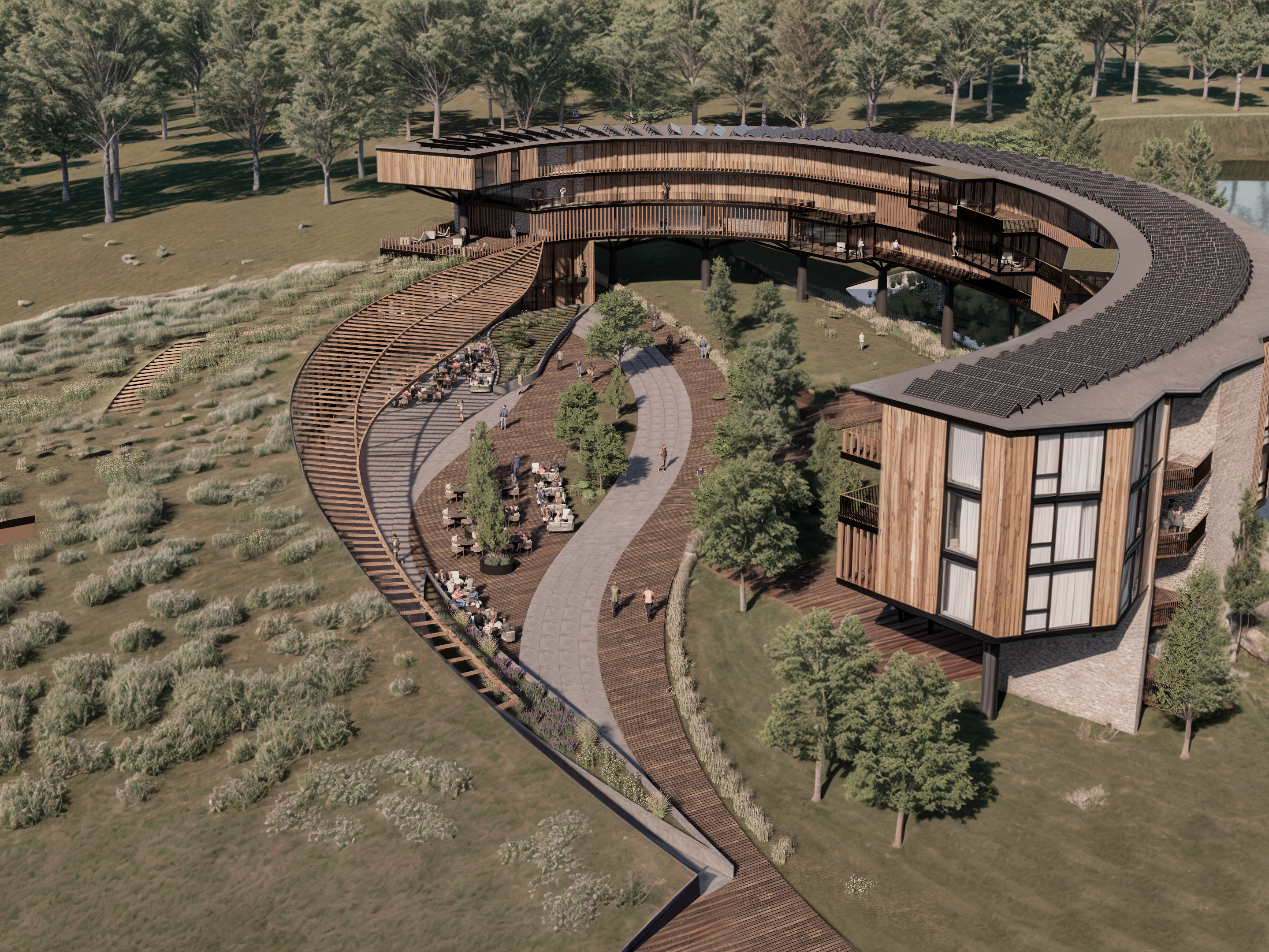
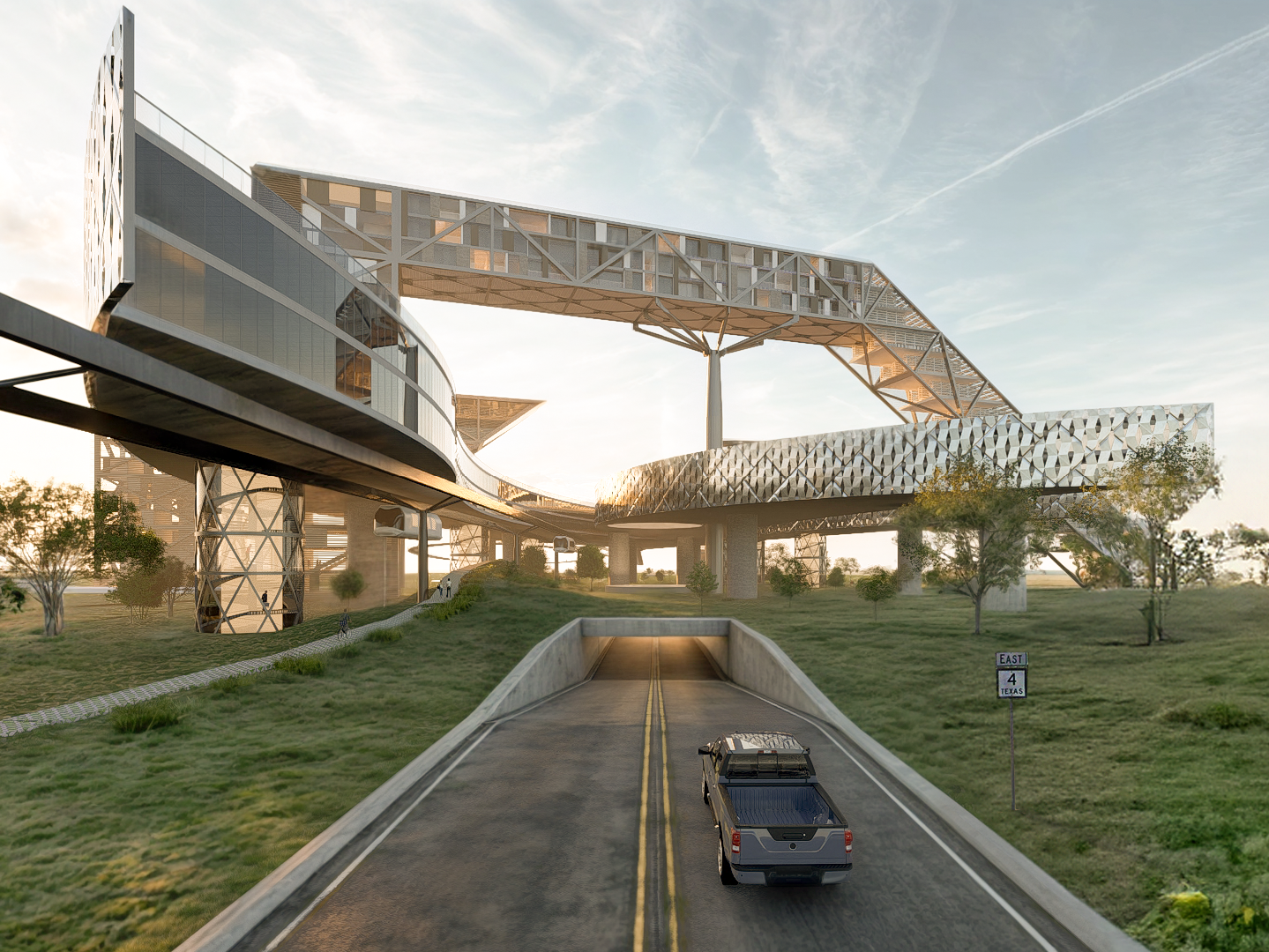
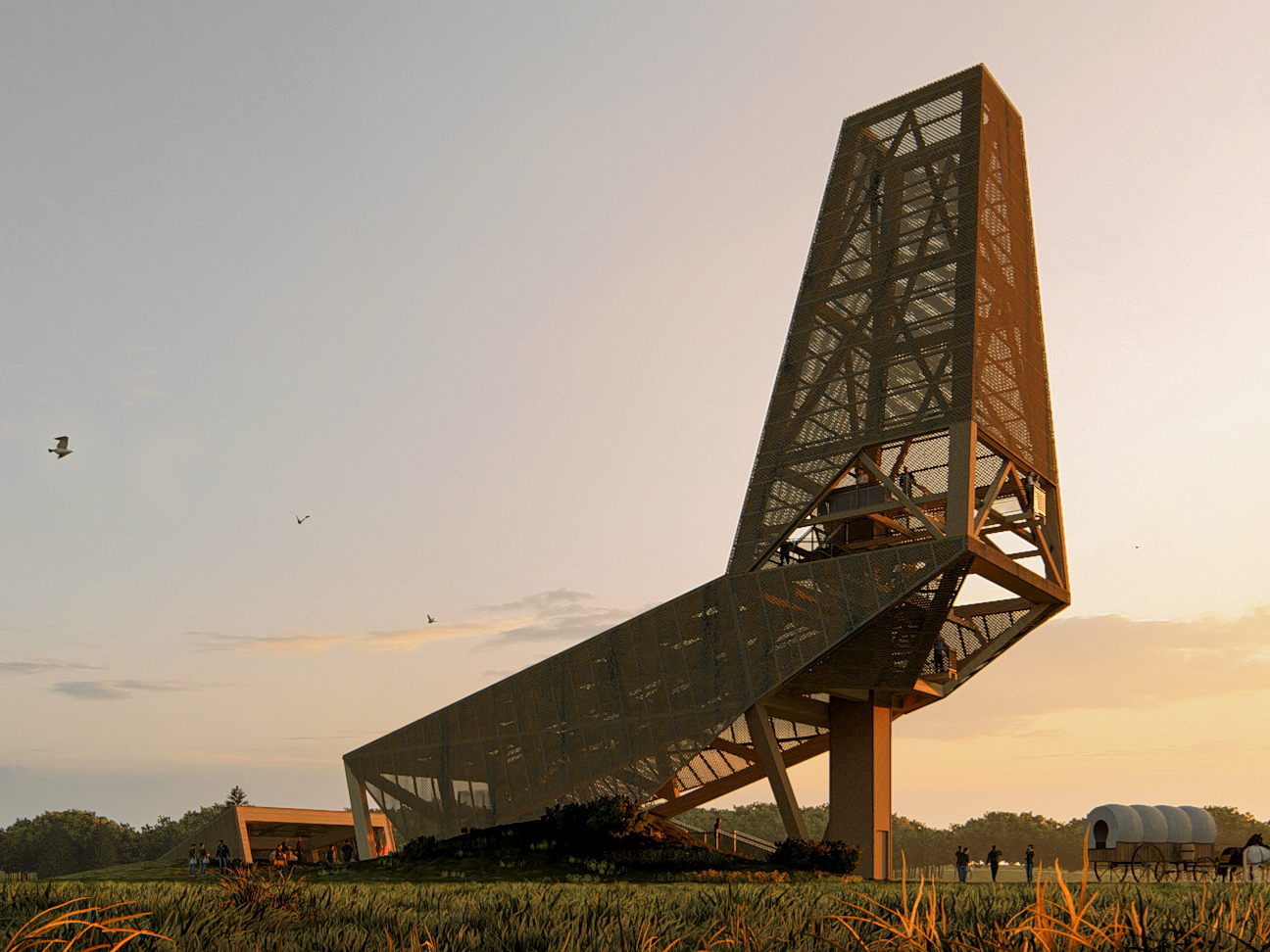
The architectural design of the Nomadism Center unfolds through a single, irregularly shaped volume spread over three levels, organically interacting with the surrounding natural environment. Located among the hills of the National Park and just a short distance from the renowned Stone Man site, the building is conceived as a bridge between nomadic tradition and the most advanced construction technologies.
Floor Plans
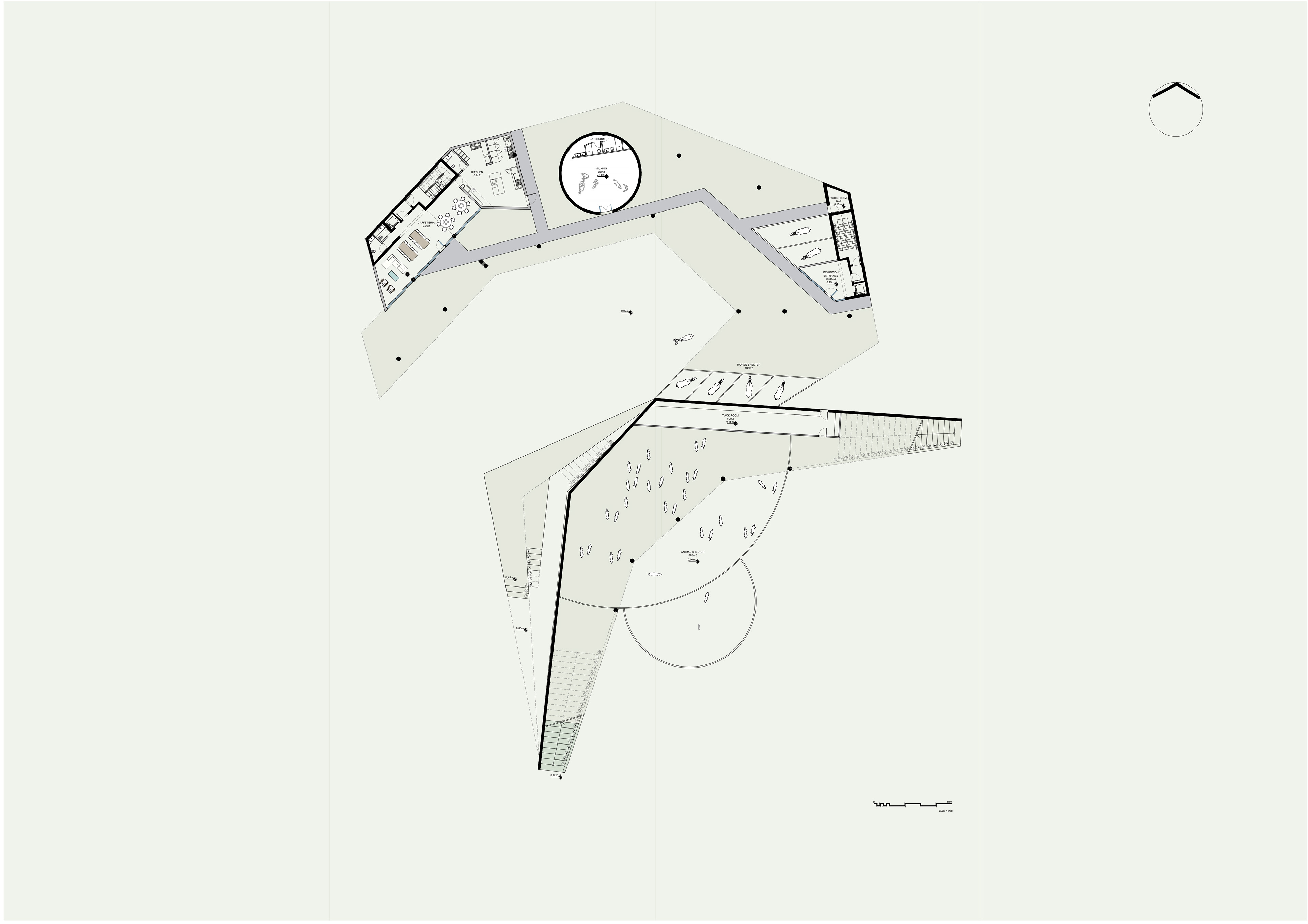
Ground floor
The ground floor of the project is designed as a dynamic and functional space, carefully conceived to ensure maximum integration between traditional activities and the free movement of animals, humans, and nature. To the south of the structure is the animal shelter, characterized by circular shapes that recall traditional Mongolian dwellings. This space, is partially covered by the staircase leading to the first floor, creating a fluid connection between the symbolic dimension of the shelter and the building’s ancillary functions.
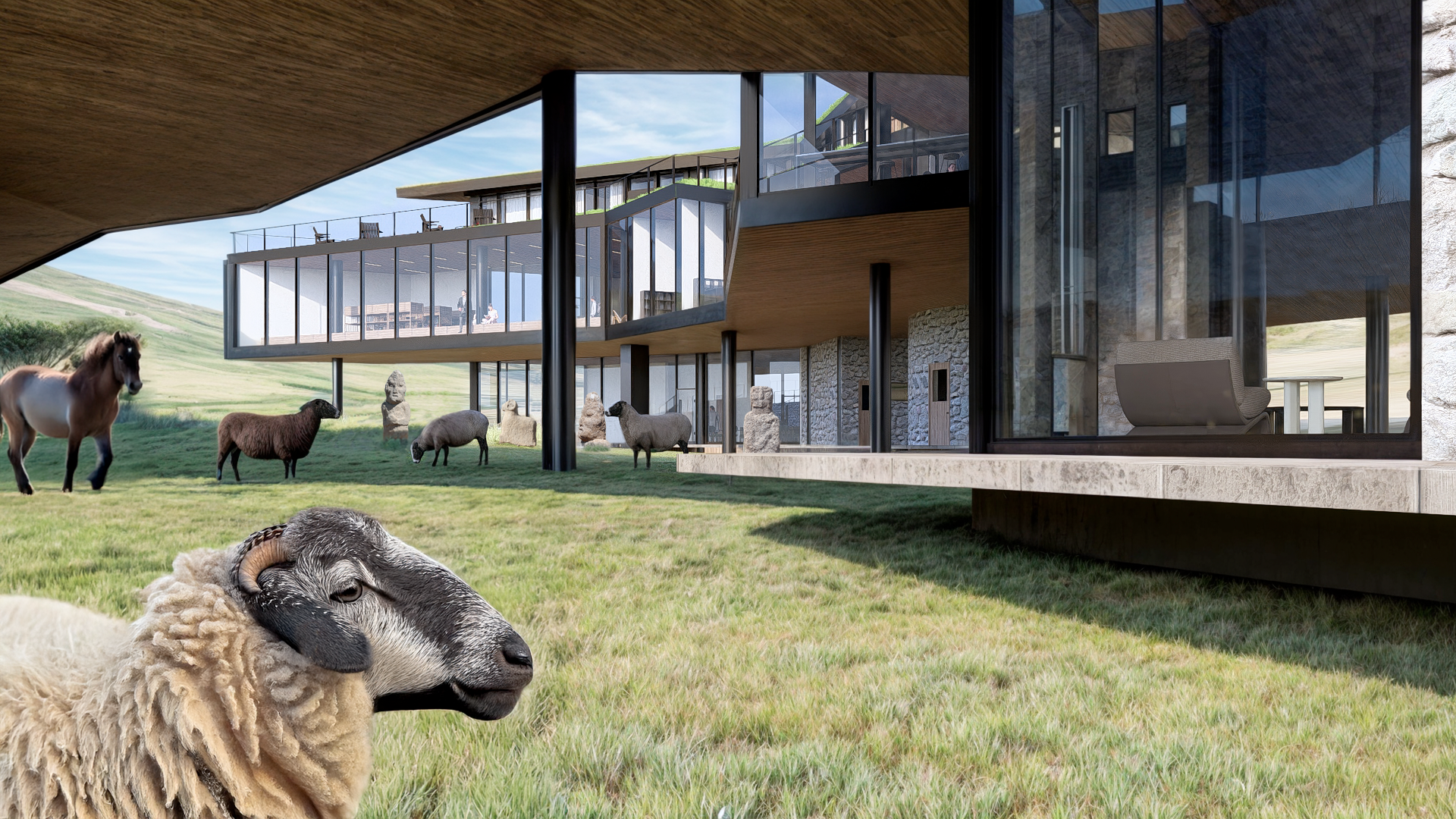
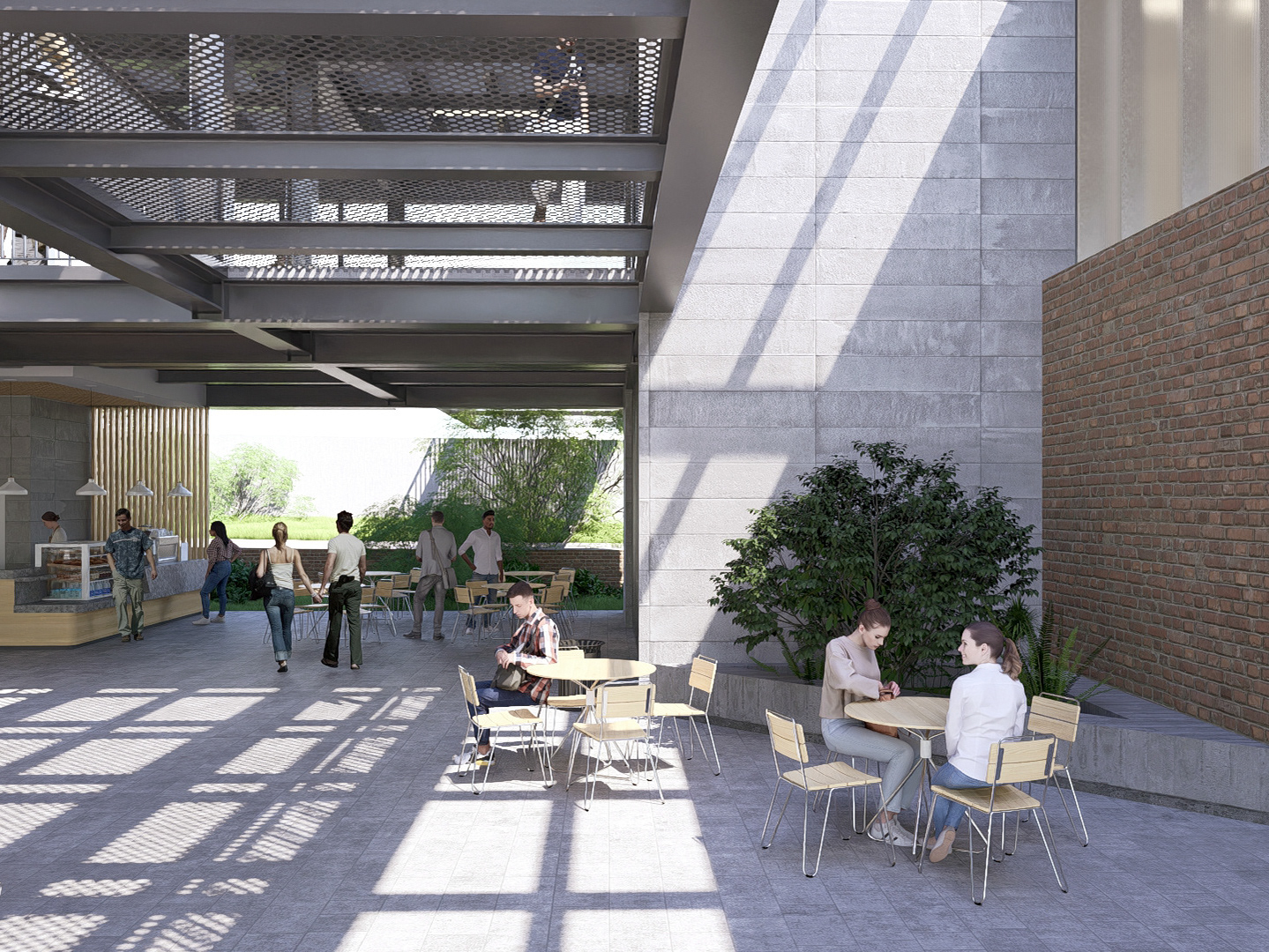
The remaining space on the ground floor is raised on pilotis, lifting the building off the ground and allowing for free use of the outdoor area, where fauna and nature interact with architecture. The interior layout is punctuated by columns and small volumes that house the various functions of the floor.
On the east wing, visitors access the exhibition area, a space designed to host exhibitions and multimedia installations. Vertical circulation elements such as staircases and elevators are integrated into this area to facilitate access to the upper levels.
Continuing along the path, a volume dedicated to animals is found: a functional stable with a storage area designed to ensure order and practicality in livestock management. Adjacent to this is another circular space designed as a milking area. This area, complete with a bathroom and sanitation facilities, combines functional needs with tradition in a space that echoes the typical forms of Mongolian shelters.
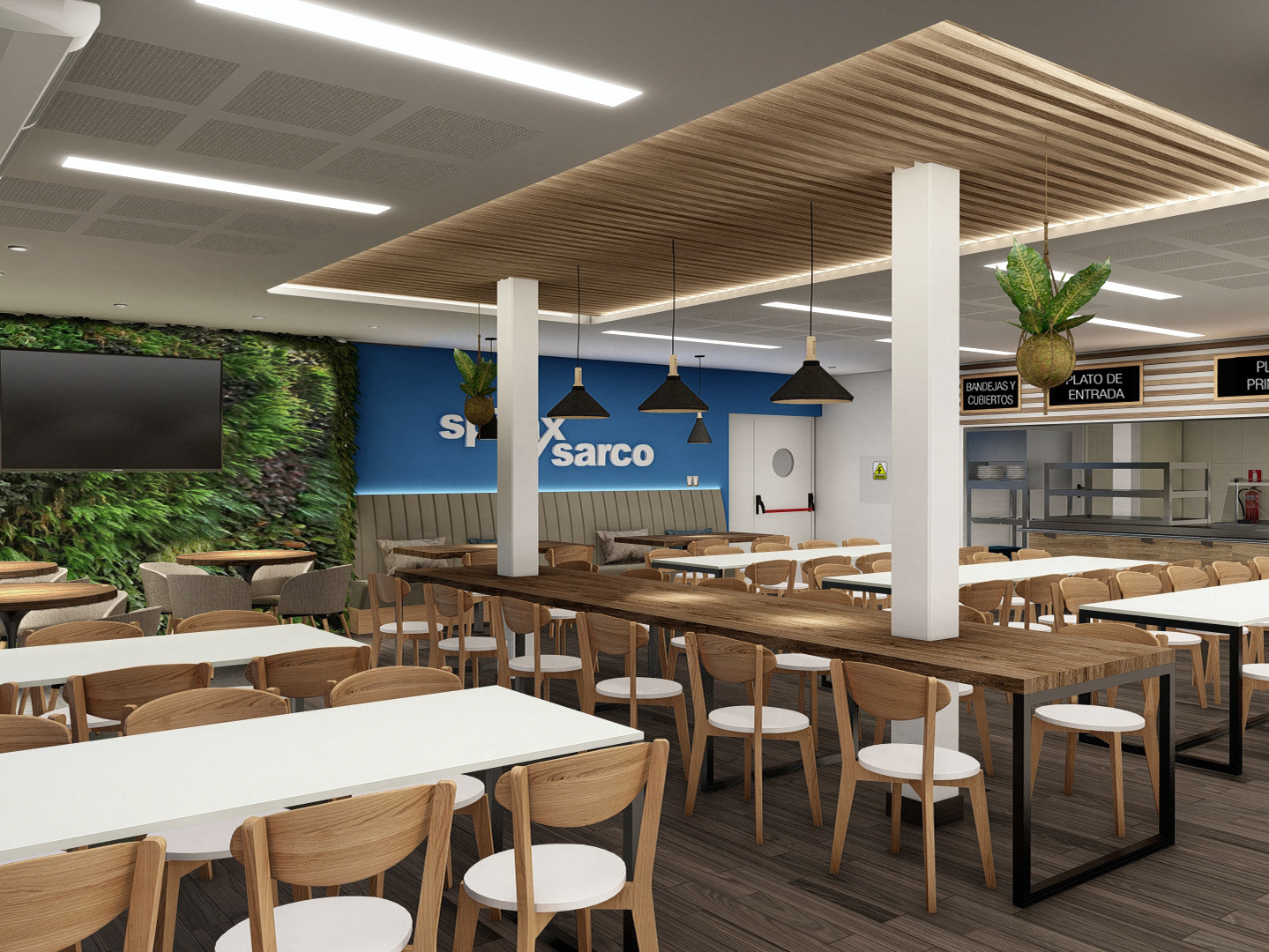
The west wing features a café with a kitchen and restrooms, designed to promote hospitality. It includes a secondary entrance with access to stairs and an elevator, improving circulation and the connection between indoor and outdoor spaces.
First Floor
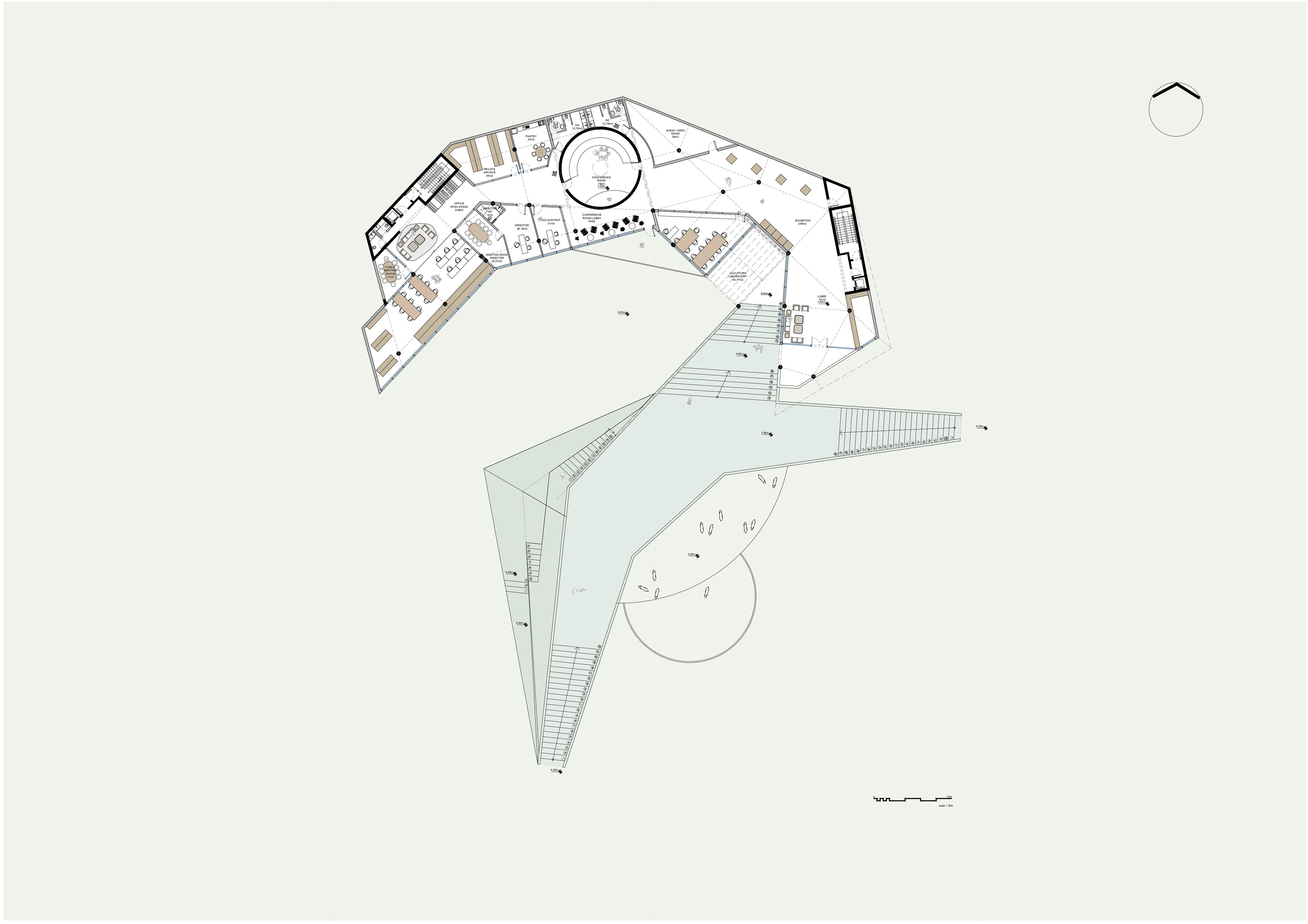
The first floor, elevated on pilotis to allow animals to move freely beneath, offers a journey that blends tradition and innovation, reflecting the deep bond between nomadic cultures and their livestock. The main entrance, located in the southeast corner, connects seamlessly to the building’s iconic sinuous staircase, creating a symbolic and welcoming path.
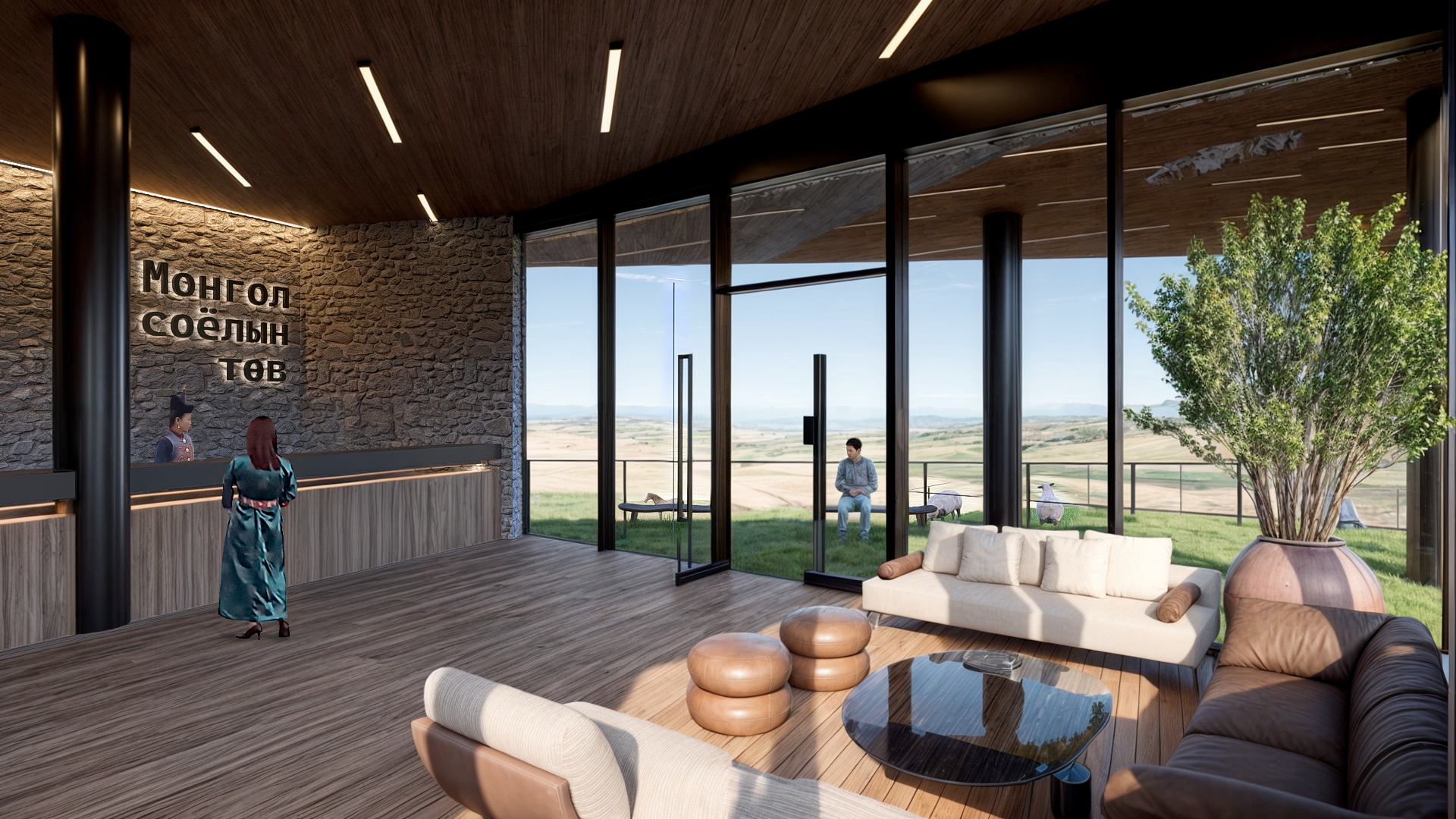
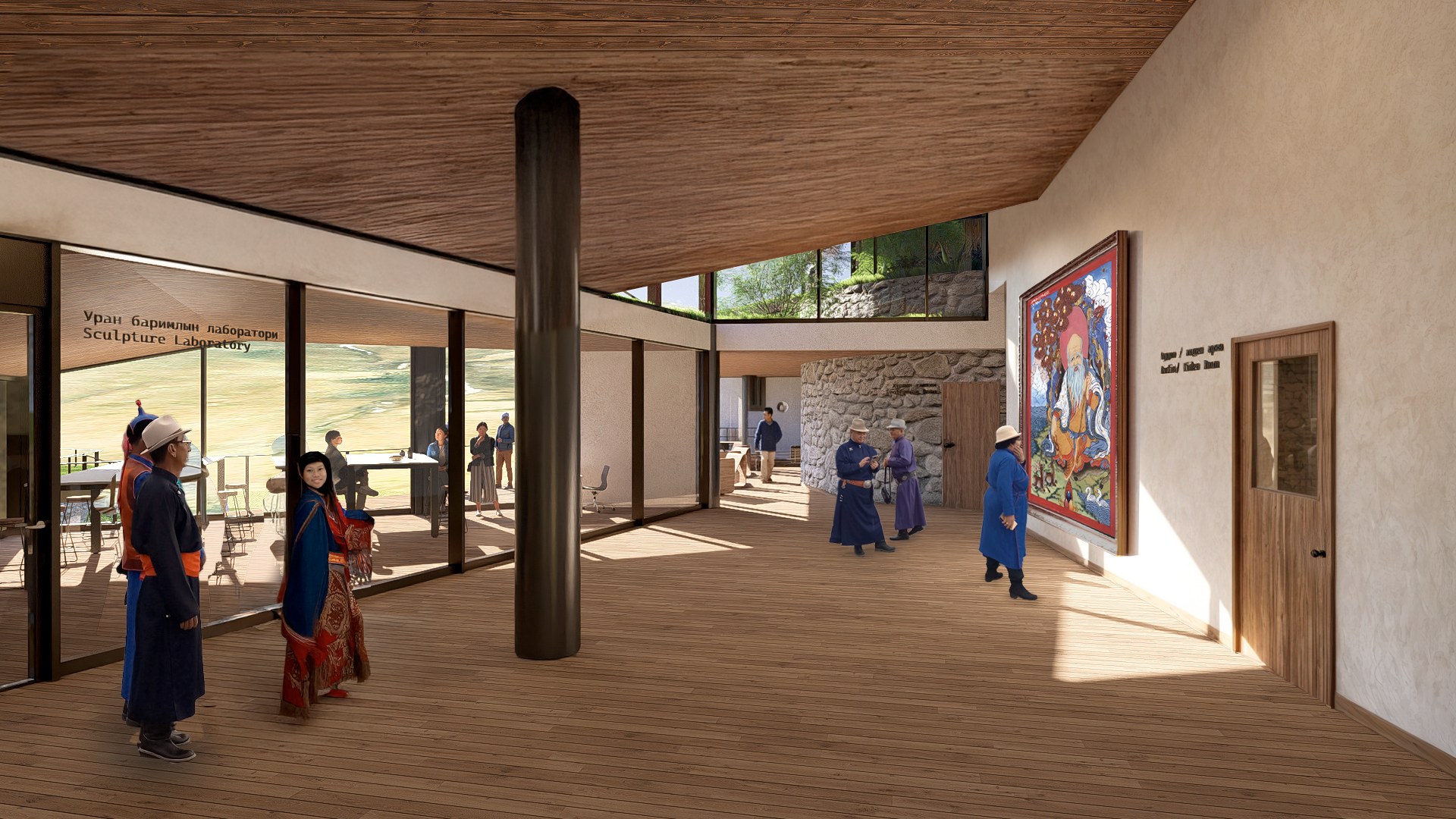
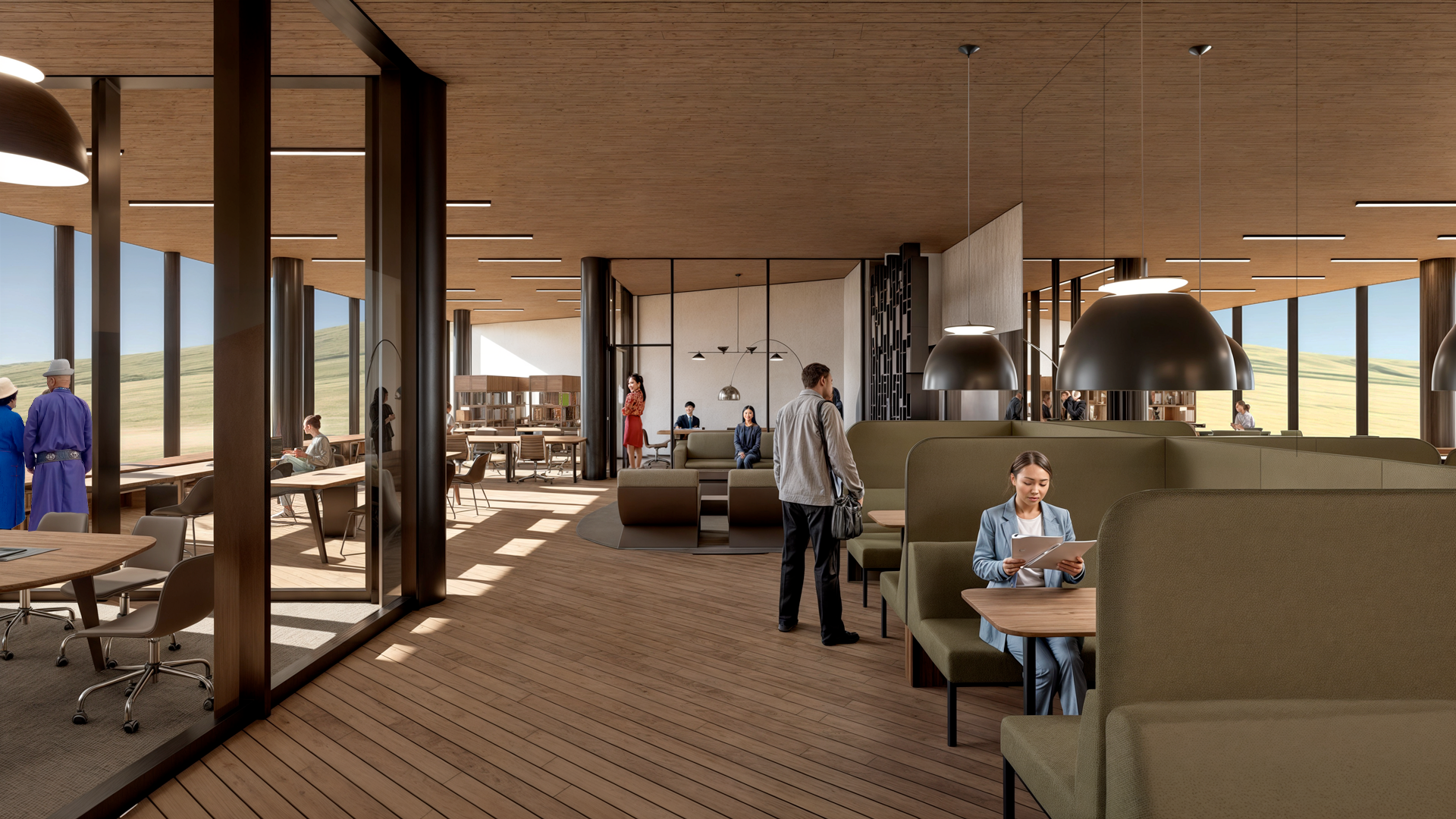
Visitors are greeted by a spacious lobby with an information and lounge area that immediately conveys a sense of hospitality. From there, the path leads into a large open exhibition space that flows with the irregular shape of the building and culminates in a circular conference hall. This centrally located space, accessible from two opposite sides, serves as a hub for presentations and cultural exchange.
Behind the conference hall, restrooms are discreetly integrated to preserve visual harmony. Nearby, an audio-video room for immersive screenings and a research lab facing south support advanced technology and innovation.
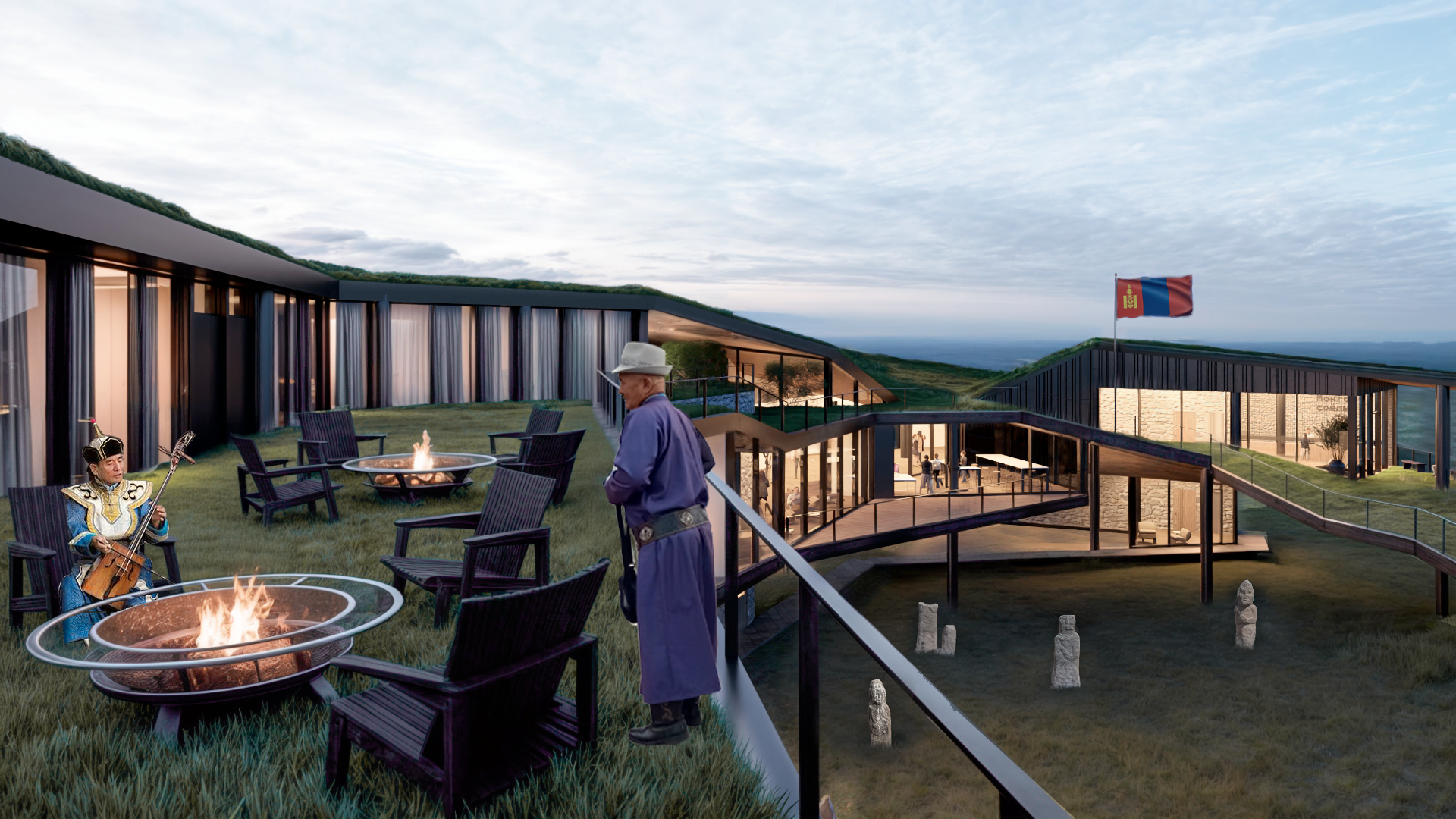
In front of the conference area, a small lobby with a terrace opens onto the inner courtyard, offering scenic views and enhancing the connection between architecture and nature. Continuing along the floor, a series of administrative spaces—including offices, meeting rooms, the director’s office, and a private archive—support the center’s operations.
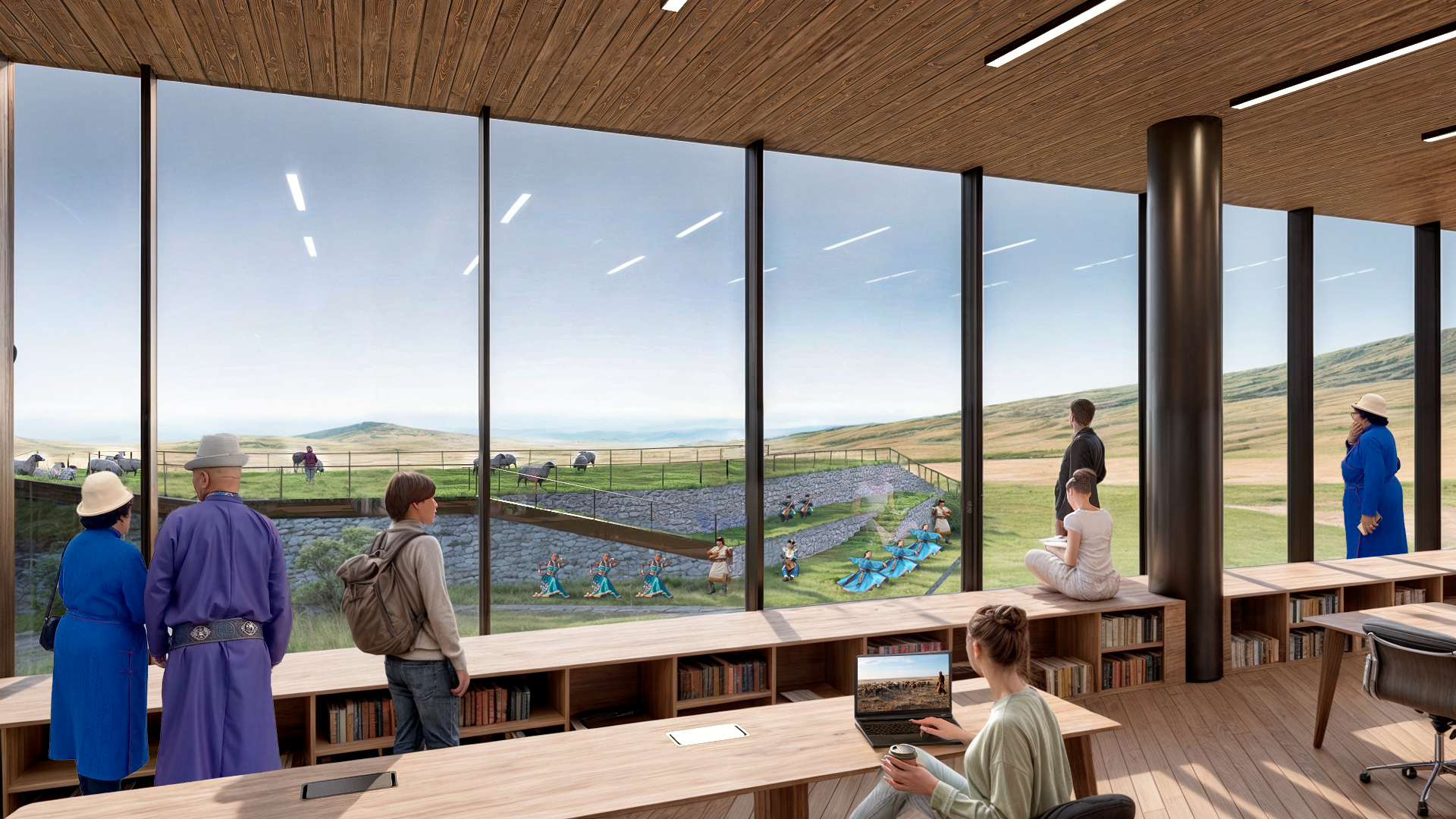
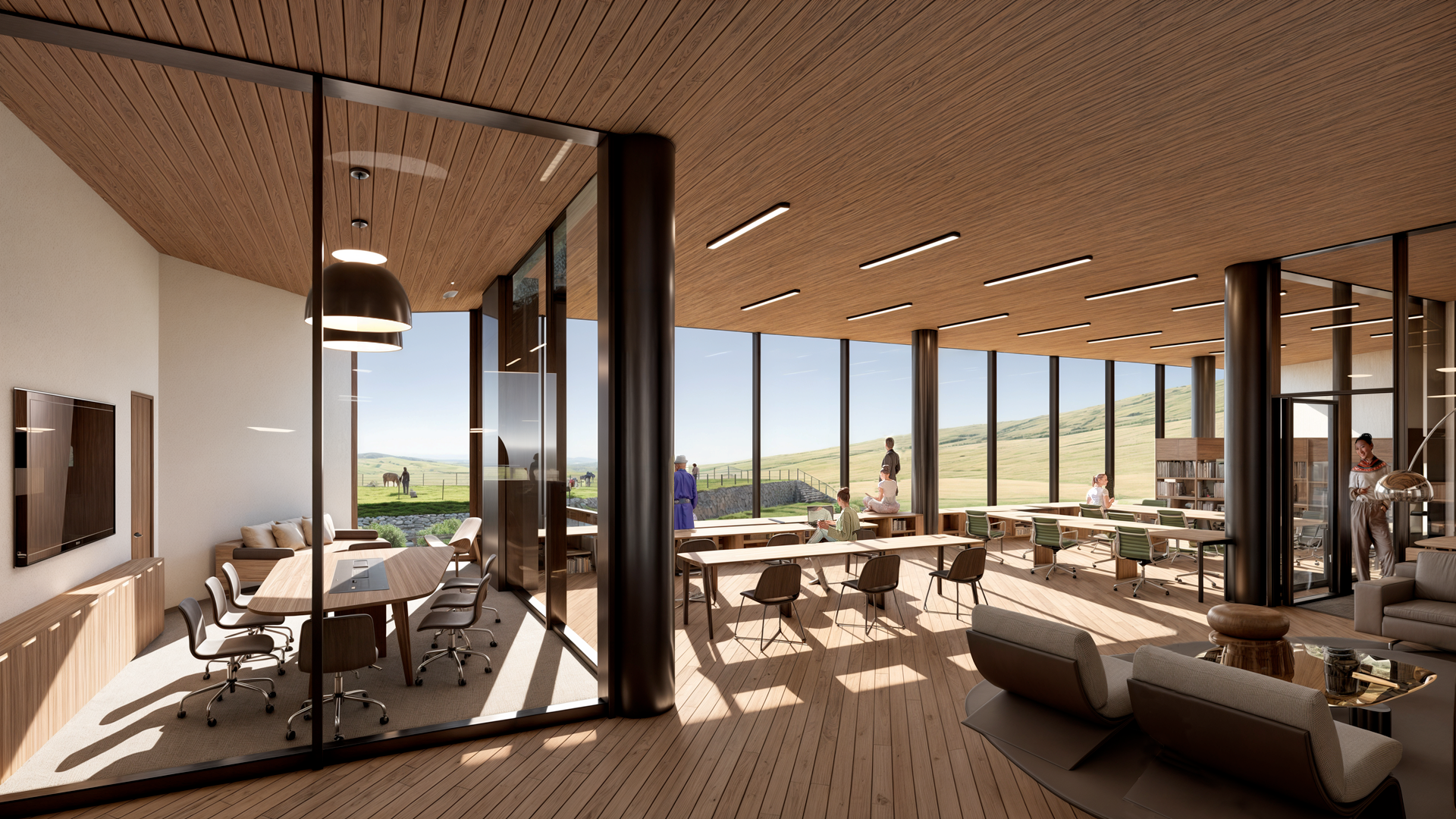
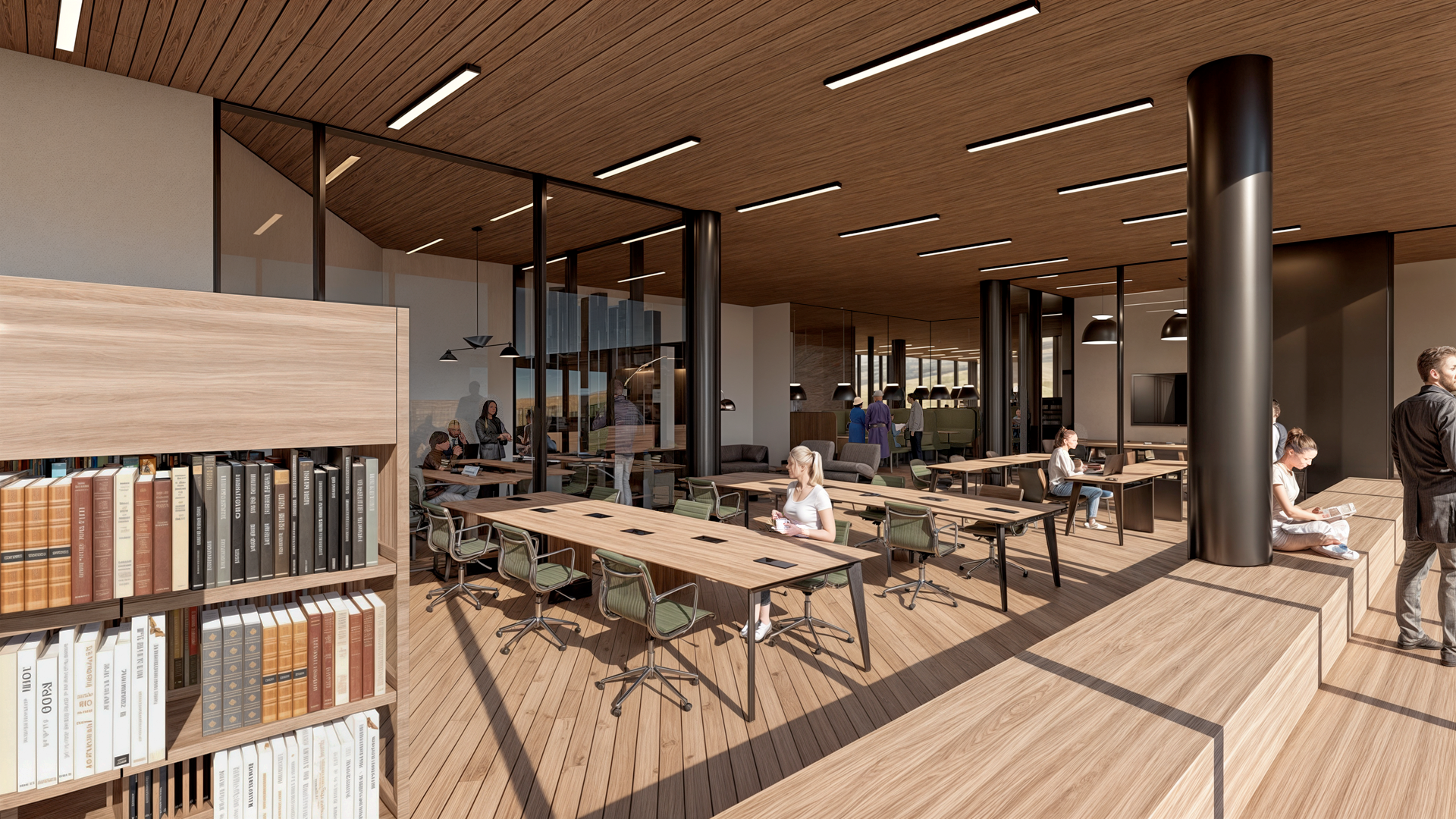
On the west wing, additional staircases, elevators, and restrooms lead to an open study area for researchers, accompanied by a nearby meeting room for collaborative sessions.
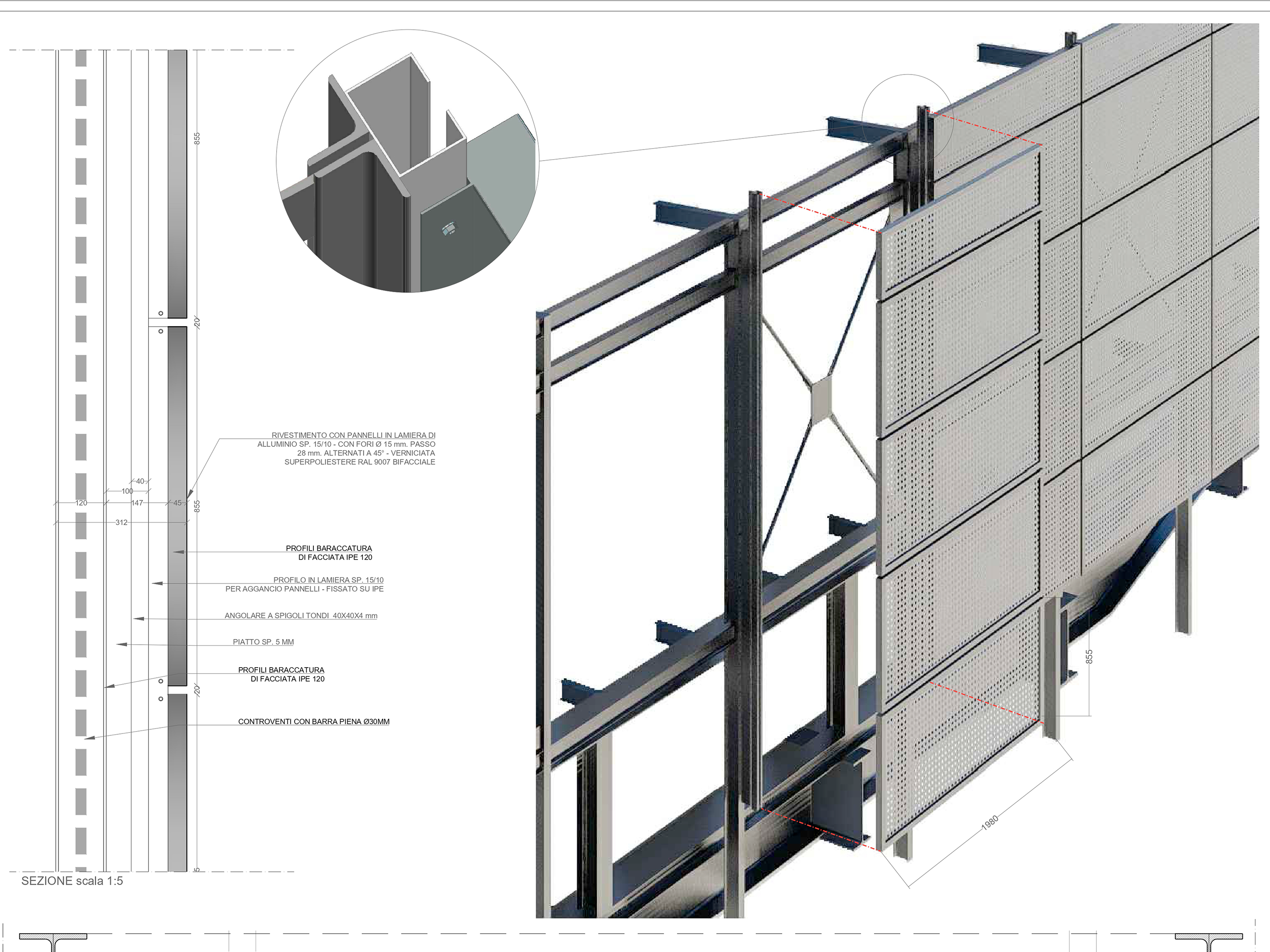
Special attention was given to the façade: the north-facing walls are fully enclosed to block cold winds, while the south side features large windows that offer panoramic views and optimize solar gain. Altogether, the first floor meets functional and organizational needs while integrating harmoniously with the natural landscape, embodying a sustainable and culturally rooted design.
Second Floor
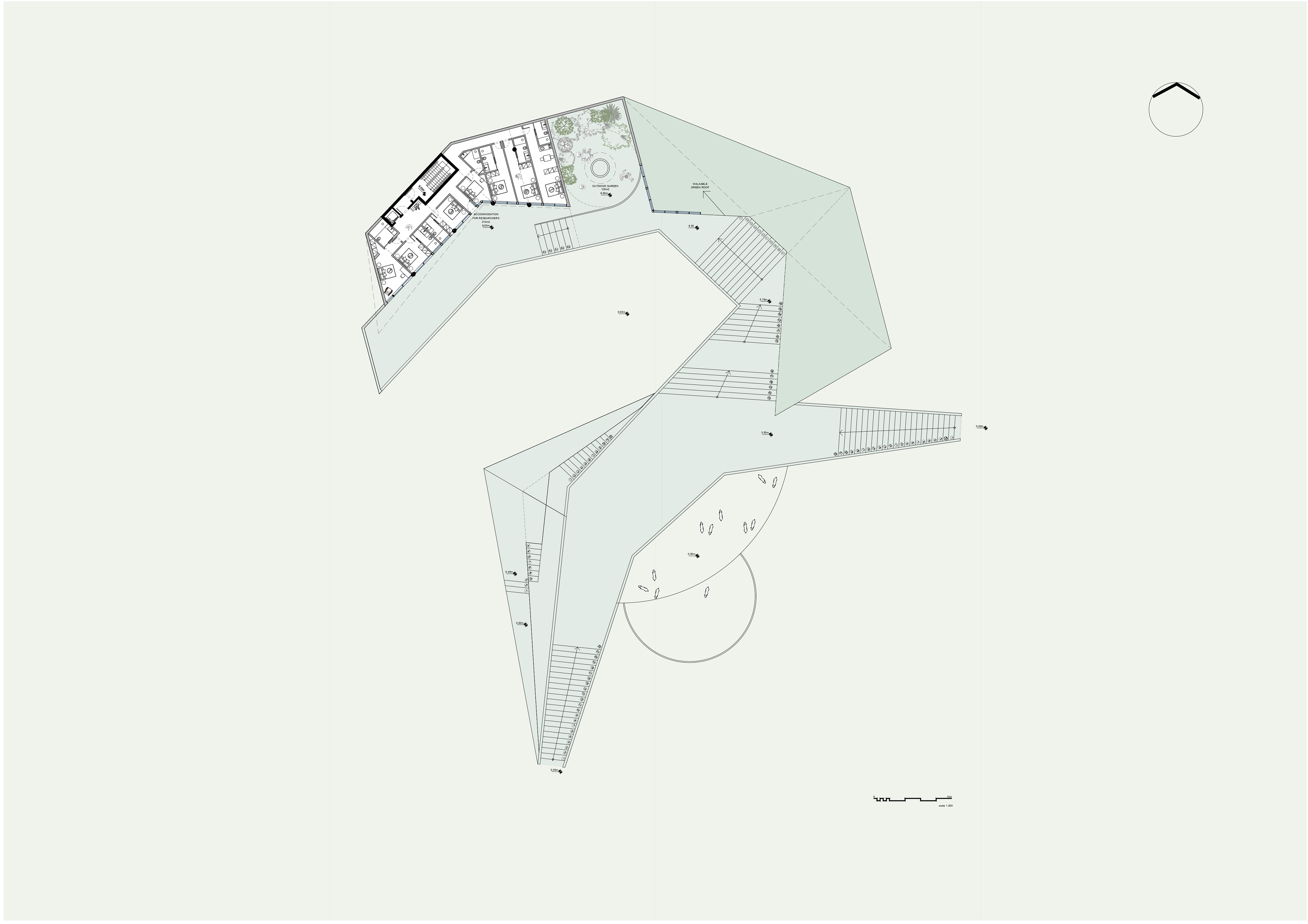
Reaching the second floor, the center opens into a dedicated accommodation area for researchers and visitors, designed to offer maximum comfort while harmonizing with the natural surroundings. Located exclusively in the building’s west wing, this level features seven rooms, including small apartments for guests attending conferences and academic events. Access is provided via both the main staircase and the elevator, as well as the large, signature sinuous stairway.
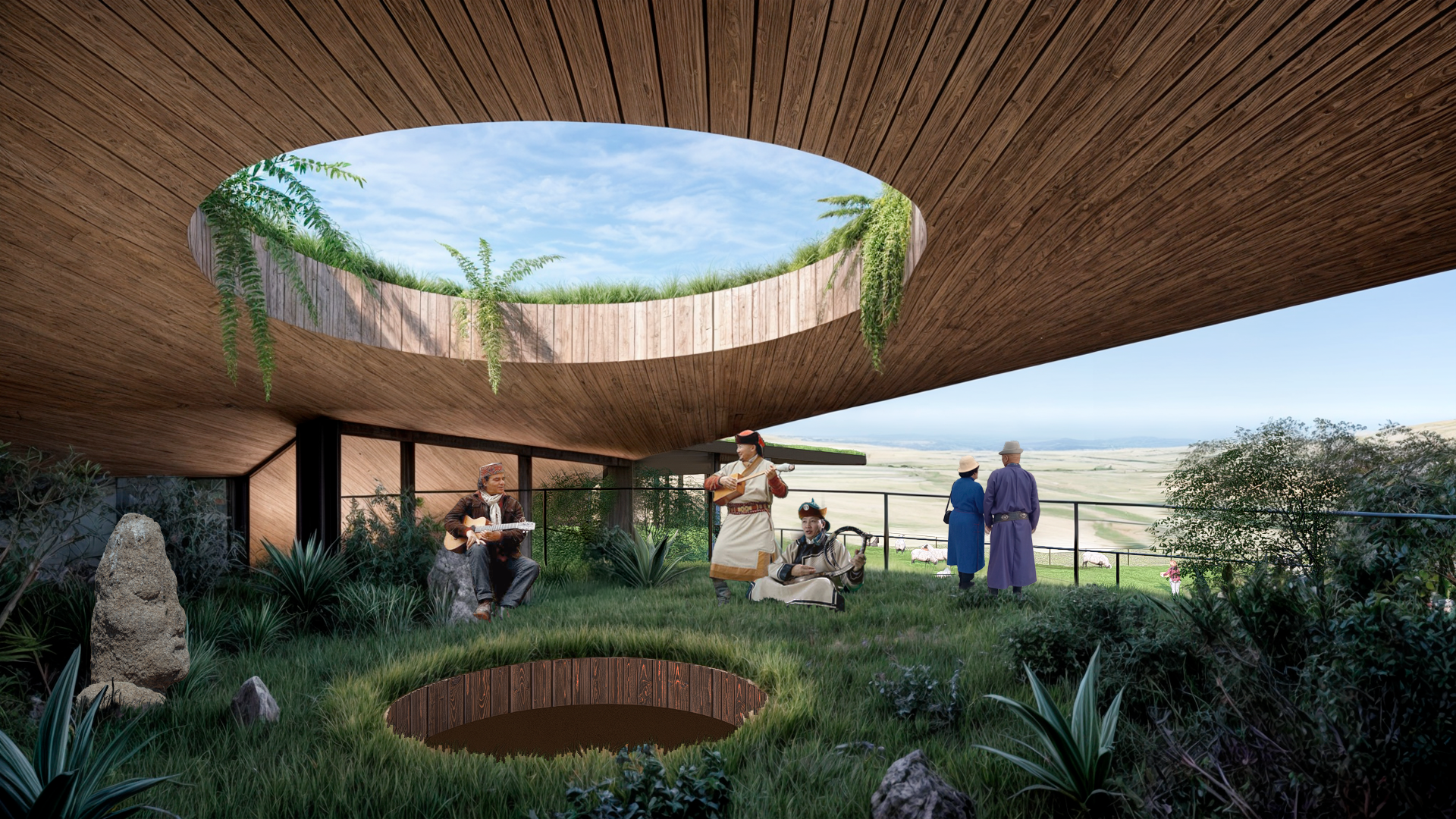
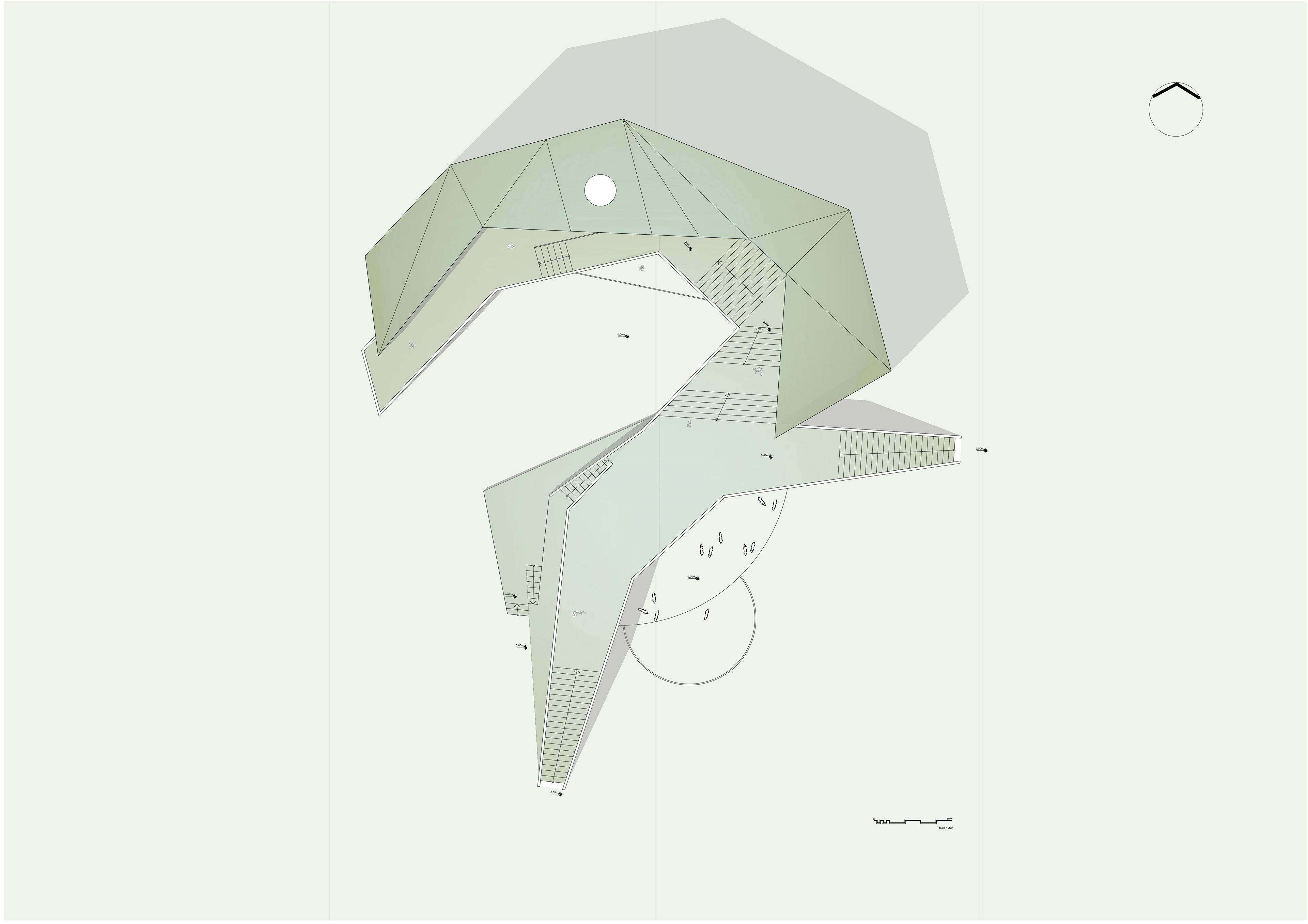
The layout includes varied levels, allowing for the creation of a small covered garden above the first-floor conference hall. A large circular opening in the roof offers a direct view of the sky, enhancing the sense of openness and connection with nature. From this same staircase, visitors can also access the green roof, designed for shared use by both people and animals.
As with the floor below, the north-facing walls are fully enclosed for protection, while large glazed openings on the south side ensure natural light, passive solar heating, and panoramic views of the landscape—reinforcing the strong relationship between architecture and nature.
Roof Floor
Views